
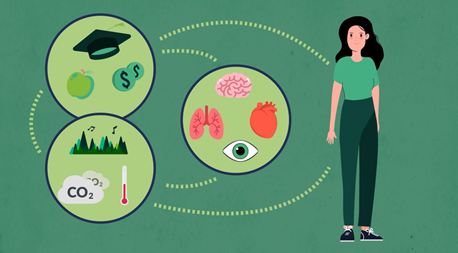
The exposome encompasses the full range of environmental factors that influence human biology throughout life. As described in ENACT’s overview of the exposomic approach, this concept enables researchers to assess how multiple exposures interact and affect health. The ExpoHealthNet cluster brings together seven research projects to examine how these combined exposures contribute to diverse health outcomes. By connecting specific health outcomes and environmental stressors, the cluster provides a comprehensive view of how the environment shapes population health.
Health Outcomes Investigated Across the Cluster
Cardiovascular and Metabolic Health
Several projects examine cardiovascular and metabolic pathways. MARKOPOLO investigates inflammation, oxidative stress, vascular function, and circadian disruption associated with cardiovascular disease and mortality. ENACT studies acute and chronic vascular conditions using indicators such as arterial stiffness, myocardial strain, and cardiometabolic biomarkers. ENVESOME assesses cardiometabolic function through hormonal, lipid, and inflammatory markers related to metabolic syndrome.
Respiratory and Allergic Diseases
Respiratory and allergic conditions are central to climAir, which focuses on allergic rhinitis, airway inflammation, and immunological responses to allergens. EXPOSIM evaluates respiratory inflammation and diseases like asthma, COPD, and hypersensitivity pneumonitis. ENACT additionally investigates acute respiratory dysfunction in paediatric patients.
Neurological and Cognitive Outcomes
Neurological health is a priority across several projects. EXPOSIGNALZ studies cognitive decline, dementia, neuroinflammation, and neurodevelopmental conditions using molecular and neurophysiological markers. MARKOPOLO contributes complementary investigations into early indicators of neurodegeneration. ENVESOME includes developmental neurotoxicity and mental health endpoints within its broader assessment of chronic disease risk.
Immune-Mediated and Autoimmune Diseases
The role of environmental exposures in immune dysfunction is extensively addressed by EXPOSIM, which examines autoimmune diseases such as rheumatoid arthritis, systemic sclerosis, lupus, and type 1 diabetes, alongside immune suppression, hypersensitivity, allergy, and vaccine response outcomes. ENVESOME complements this work through detailed profiling of inflammatory cytokines and oxidative stress.
Dermatological and Ocular Conditions
ENACT provides an in-depth examination of dermatological and ocular pathways, including skin barrier integrity, inflammatory mediators, photodamage, ocular inflammation, and structural markers relevant to age-related conditions.
Maternal, Fetal, and Early-Life Development
Early-life vulnerability is addressed by UPRISE, which investigates pregnancy exposures, placental and embryonic responses, and risks of adverse birth outcomes such as growth restriction, low birth weight, and preterm birth.
How the Exposome Explains the Combined Effect of Environmental Factors
A defining feature of the cluster’s work is the recognition that disease arises not from single exposures, but from the combined influence of multiple environmental conditions acting simultaneously. Using personal and environmental monitoring, multi-omics analyses, and advanced modelling, the projects identify how these combined exposures affect health outcomes. This integration enables the detection of early biological changes that precede chronic disease and clarifies shared mechanisms across disease categories.
Why This Research Is Essential for Public Health
Exposome research strengthens disease prevention by identifying environmental contributors to major non-communicable diseases and revealing early biomarkers of risk. These findings inform improved health and environmental policies, including air quality standards, chemical regulation, climate adaptation strategies, and urban planning measures that support long-term well-being. The approach also highlights population groups disproportionately affected by environmental exposures, providing a basis for more equitable public health interventions. By linking diverse health outcomes to common environmental determinants, the exposome framework supports more effective strategies to protect health across generations.
Learn more about the project on the ENACT website.