
Traffic noise is not just an annoyance. It is a cardiovascular risk factor.
For decades, traffic noise has been treated primarily as a quality-of-life issue. Increasingly, scientific evidence shows that this perspective is outdated. Traffic noise is a relevant and underestimated cardiovascular risk factor with serious implications for public health.
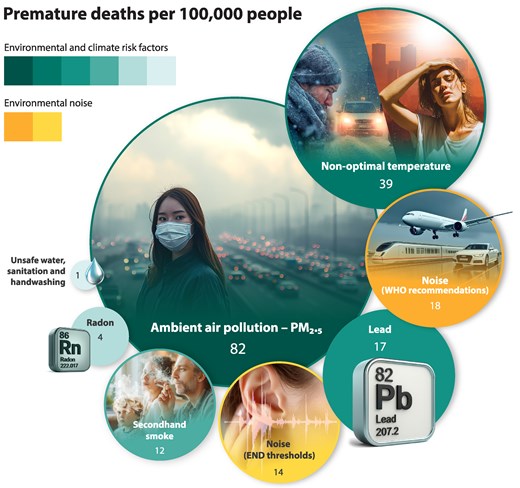
The MARKOPOLO project investigates how traffic noise and air pollution, in particular particulate matter and ultrafine particles, jointly contribute to cardiometabolic diseases such as hypertension, diabetes and atherosclerosis. A recent review by MARKOPOLO partners Thomas Münzel and Mette Sørensen responds to the European Environment Agency’s Environmental Noise in Europe 2025 report with a clear message: Traffic noise is a major driver of cardiovascular disease. Its impacts extend beyond health, generating significant environmental and economic costs across Europe.
From a mechanistic perspective, the link between noise and cardiovascular disease is well established. Noise exposure activates the sympathetic nervous system and the hypothalamic pituitary adrenal axis. This leads to the release of stress hormones, increased heart rate and elevated blood pressure. Persistent activation of these pathways induces oxidative stress and inflammation. Over time, this biological cascade promotes endothelial dysfunction, accelerates hypertension and contributes to atherosclerosis and heart failure. The magnitude of these effects is comparable to that observed for air pollution and smoking.
These findings have direct consequences for medicine and policy. For cardiologists and prevention specialists, noise exposure can no longer be viewed as a purely environmental issue. It represents a cardiovascular risk factor with robust and causal evidence.
Addressing traffic noise is not only about quieter cities. It is about preventing cardiovascular disease and reducing avoidable health burdens across populations. Noise reduction deserves the same level of attention as smoking cessation or blood pressure control within clinical prevention strategies. At the
same time, it calls for stronger integration of health considerations into transport, urban planning and environmental policy.
Read the full publication from the MARKOPOLO team:
Thomas Münzel, Eulalia Peris, Mette Sørensen, From noise to heart disease: European Environment Agency sounds the alarm for Europe 2025, European Heart Journal, 2026