
Two reviews, one shared message
Two new review articles published in CHIMIA scientific journal highlight why collaboration across disciplines is so important when studying how airborne particles affect human health.
The reviews focus on two closely connected topics: airborne ultrafine particles (UFPs) and airborne nanoparticles. Together, they show that understanding pollution-related health risks requires expertise from many fields – from exposure science and epidemiology to toxicology, clinical research, and policy. Both papers were published in the CHIMIA special issue “Nanoparticle Research in Switzerland – From the Past to the Future,” which highlights Switzerland’s strong role in nanoparticle research and international scientific exchange.
Within the ExpoHealthNet cluster, these two reviews also reflect the value of working across projects. MARKOPOLO and UPRISE approach airborne particle research from different but complementary angles – helping to build a fuller picture of how environmental exposures can shape health across the life course. ExpoHealthNet brings together seven Horizon Europe projects to generate evidence on how environmental stressors contribute to non-communicable diseases and to inform public health policy.
From real-life exposure patterns to biological mechanisms, these reviews show why environmental health research is strongest when expertise is combined.
MARKOPOLO: understanding real-life exposure and population health
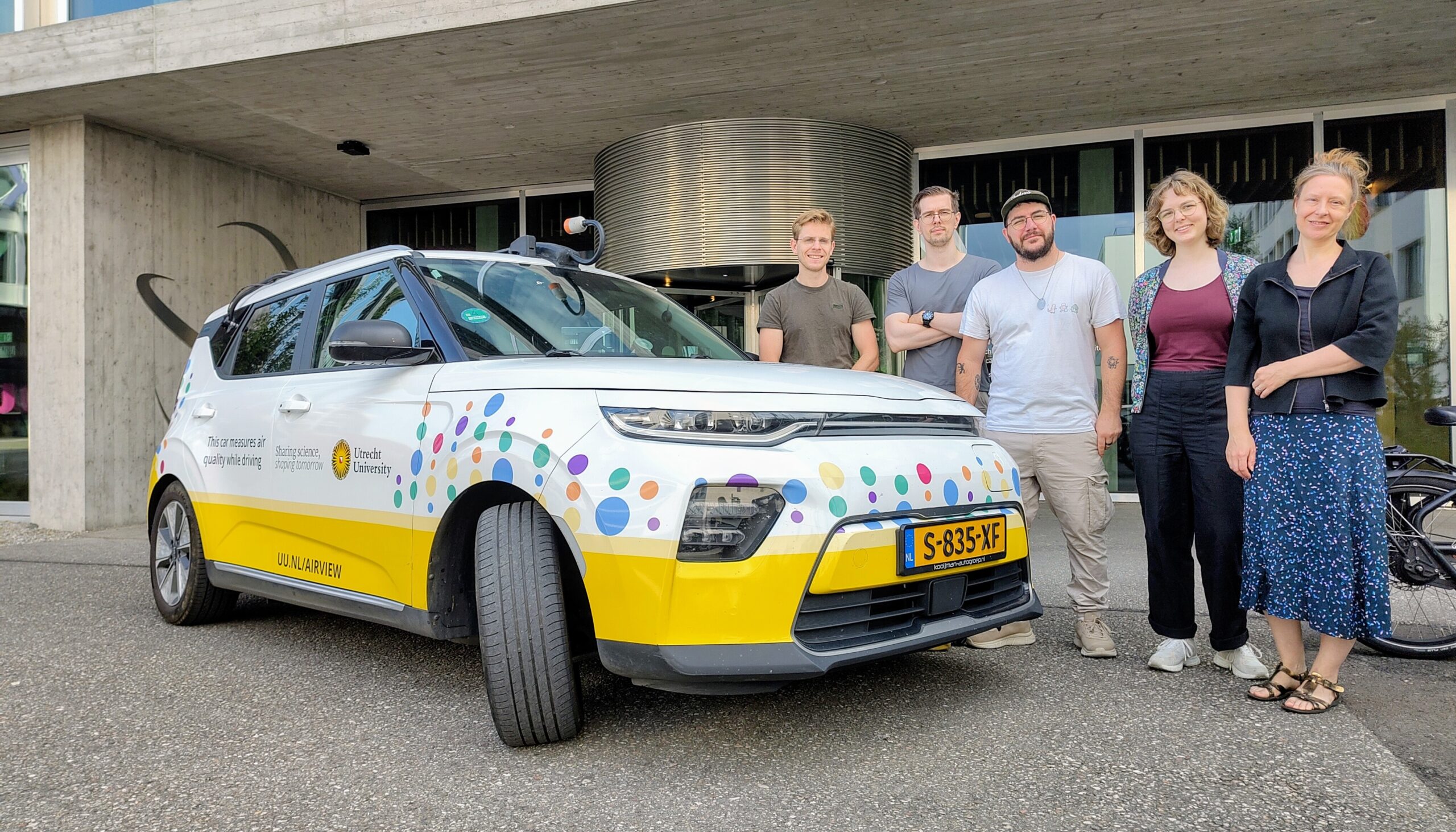
The MARKOPOLO-linked review looks at ultrafine particles – very small airborne particles that show strong differences across place and time, can penetrate deep into the lungs, and may enter the body more widely. The paper explains that Switzerland has contributed substantially to UFP research through measurement campaigns, mobile monitoring, and modelling studies. It also notes that ongoing Swiss and European projects are working to improve high-resolution exposure models, assess health impacts at the population level, and support future air quality standards and regulatory responses.
This kind of research is essential because public health action depends on knowing where exposure happens, who is most affected, and how policy can respond.
UPRISE: understanding mechanisms and risks during pregnancy
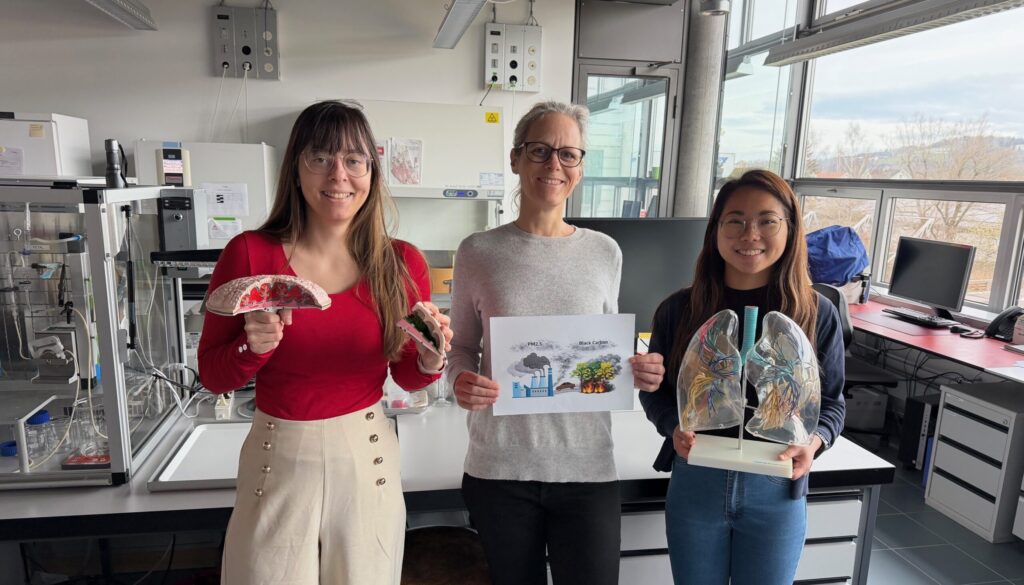
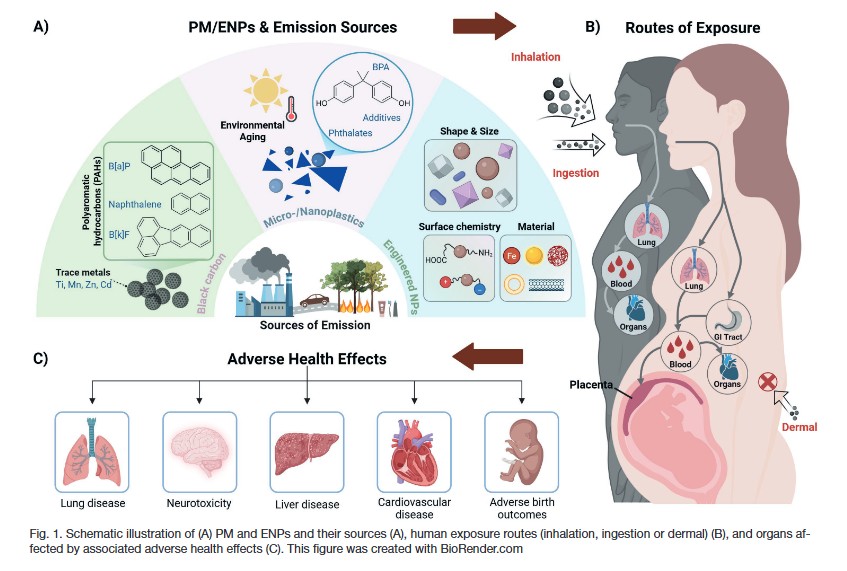
The UPRISE-linked review focuses on airborne nanoparticles and how they interact with the body after inhalation, with a special emphasis on the pulmonary and placental barriers. The authors describe how particles may cross biological barriers, trigger direct and indirect toxic effects, and in some cases act through a “Trojan Horse effect” that can enhance toxicity. The review also highlights important knowledge gaps and the need for better evidence to strengthen risk assessment and policy.
This is highly relevant to UPRISE, which studies how exposure to ultrafine particles and micro- and nanoplastics may affect fetal health. As the review explains, multidisciplinary consortia that combine environmental exposure assessment, clinical cohorts, experimental models, and in silico work hold strong promise for advancing our understanding of pollution-related health effects. It specifically highlights UPRISE as an example of this approach, bringing together environmental scientists, clinicians, and public health experts, and combining epidemiological data with advanced human placental models to better understand links between maternal exposure and adverse birth outcomes.
Why this matters for ExpoHealthNet
Taken together, the two reviews show why synergies between projects matter.
One review helps us understand how people are exposed to ultrafine particles in real life and what the epidemiological evidence currently shows. The other helps us understand what these particles may do inside the body, including during sensitive periods such as pregnancy. When these perspectives are brought together, they create a stronger foundation for prevention, regulation, and public health protection.
This is exactly the kind of added value ExpoHealthNet was created to support:
- sharing knowledge across projects
- avoiding duplication
- connecting methods and expertise
- strengthening the science-policy interface
In environmental health, no single discipline can answer every question on its own. But together, researchers can move closer to the evidence needed to protect current and future generations.
Read more
Explore the two CHIMIA reviews to learn more about these complementary research perspectives:
- MARKOPOLO review: Airborne Ultrafine Particles: Real-life Exposure Patterns, Epidemiological Evidence and Regulatory Responses in Switzerland and Beyond
- UPRISE review: Airborne Nanoparticles and Human Health: Toxicological Insights with a Focus on Inhalation Exposure and Mechanisms of Toxicity During Pregnancy
Follow ExpoHealthNet for more updates on how collaborative research is helping to advance evidence on environmental stressors and non-communicable diseases across Europe.