
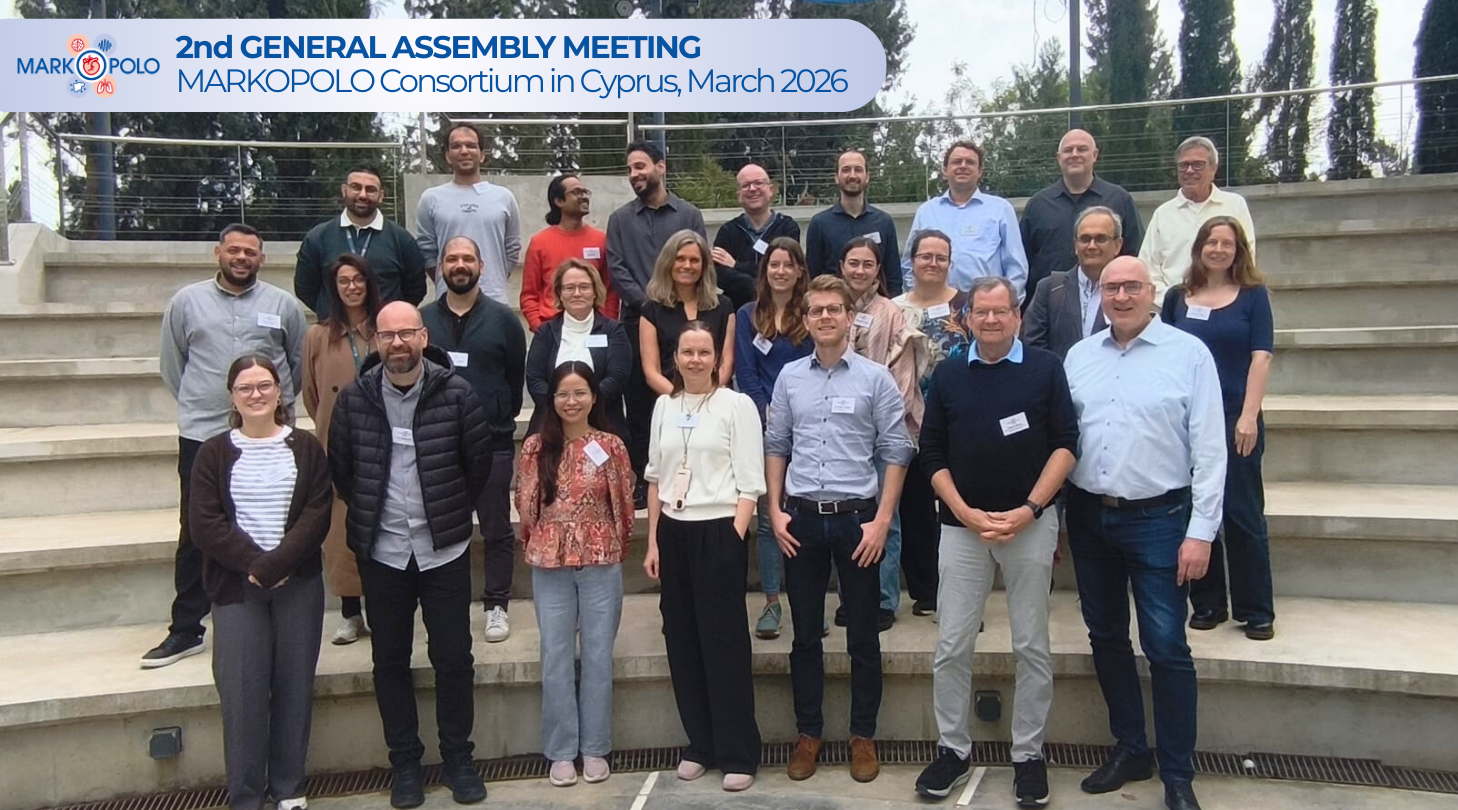
After a year of regular virtual exchanges, the MARKOPOLO consortium reconvened in person in Cyprus for its 2nd General Assembly Meeting. This long-awaited gathering provided a valuable opportunity to strengthen collaboration, exchange ideas, and align on the next phase of the project.
The meeting opened with a warm welcome from Scientific Coordinator Andreas Daiber and local host Jos Lelieveld at The Cyprus Institute. Over two days, participants engaged in a hybrid format to review the latest research findings, discuss key project developments, and refine strategic priorities in the search for markers of pollution.
Scientific Progress and Work Package Highlights
The first day focused on scientific presentations and in-depth discussions across several core work packages. Key highlights included:
- WP4: Advancing the estimation of human environmental exposures and their impact on cardiovascular health indicators
- WP1: Investigating functional and biochemical disease-relevant changes induced by noise and ultrafine particles in preclinical models, with a focus on the lung-brain-heart axis
- WP7: Developing high-resolution modelling approaches for ultrafine particle exposure and kinetic models in chronic disease contexts
- WP9: Presenting initial omics screening efforts and biomarker discovery strategies
These sessions demonstrated substantial progress across the consortium, particularly in data generation, deployment of measurement infrastructure across Europe, and experimental model development.
Data Integration and Policy Relevance
In the afternoon, the discussions addressed cross-cutting themes critical to the project’s impact:
- Bioinformatics (WP11): Focus on harmonisation of multi-omics data processing and analysis pipelines, ensuring comparability and robustness across datasets remains a central challenge for large-scale environmental health research.
- Science-Policy Interface (WP20): Exploration of mechanisms to translate scientific findings into actionable environmental health policies. Strengthening this interface is essential to ensure that evidence on noise and ultrafine particles informs risk management and public health protection.
Day Two: Dissemination, Outreach, and Strategic Alignment
The second day shifted focus towards dissemination, outreach, and training activities. Updates on project management, administrative coordination and dissemination and communication activities ensured alignment across partners.
The consortium also reviewed progress within the Cluster ExpoHealthNet, highlighting synergies and collaboration beyond the immediate project framework.
Importantly, the Scientific Advisory Board provided strategic input at the end of this two-day meeting, offering critical guidance to refine priorities and maximise the project’s scientific and societal impact in its next phase.
Looking Ahead
The 2nd General Assembly Meeting marked a key milestone for the MARKOPOLO project. It reinforced the strength of interdisciplinary collaboration and clarified the path forward in addressing the complex health effects of environmental pollution. With renewed momentum, the consortium now moves into the next phase of research, focusing on generating robust evidence and translating findings into meaningful policy action.