
Pollution often makes the news, and we all know it’s a problem – but what are the most common forms of chemical pollution? How do these pollutants enter our environment, and our bodies? Where exactly do they come from?
Whilst learning about pollution in our environment can be alarming, research projects like ExpoSignalz (alongside decades of regulatory innovation and public pressure) continue to help us better understand what chemicals are in our environment. Policies and action on pollutants have made a meaningful difference in the past, driven by increasing scientific understanding. With our improving knowledge of pollutants, we can also protect our health and environment in the future. In this article, we aim to demystify some of the common forms of pollution and explore several groups of chemicals being investigated in the ExpoSignalz project.
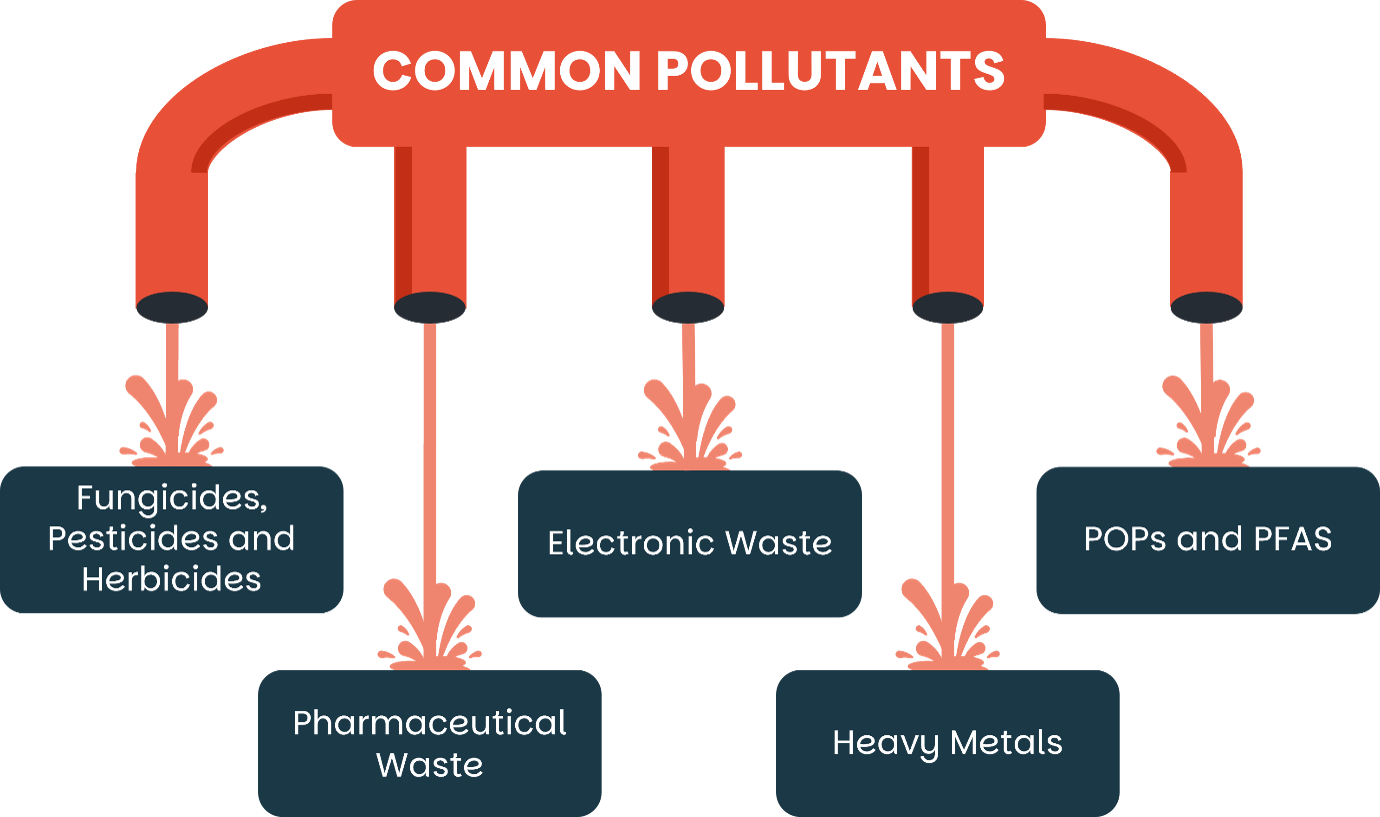
Fungicides, Pesticides and Herbicides
Fungicides, pesticides and herbicides are chemicals which help control damage or destruction from insects, weeds, fungi, or a variety of plant diseases.
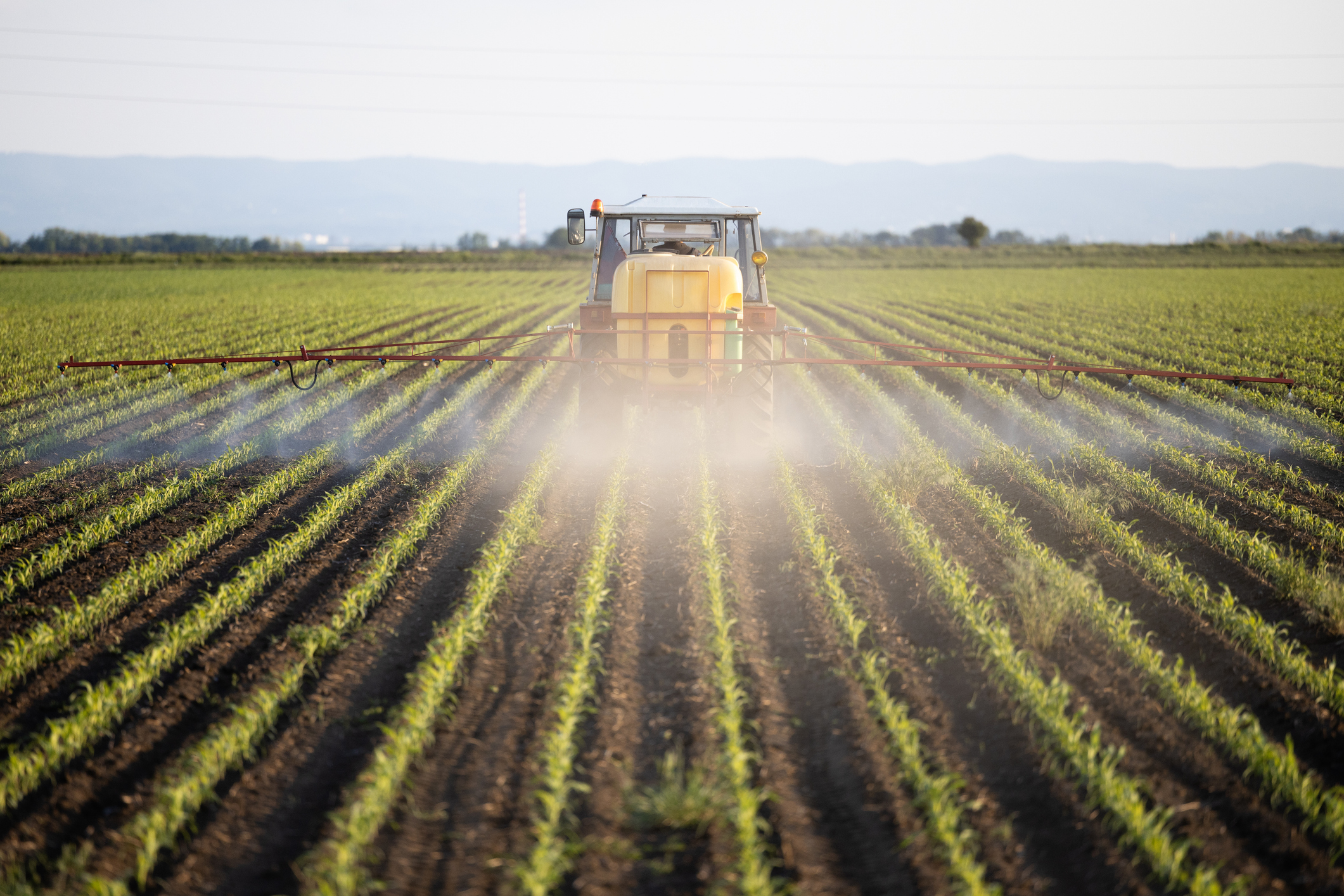
Commonly used in agricultural settings, these chemicals are a critical part of modern farming infrastructure and help ensure we can produce the food we need. The chemicals are also used in other settings like forestry, gardening, and other maintained green spaces[1] – for example on road verges to control weeds.[2]
Given the nature of their role, these chemicals are harmful to certain creatures, plants or fungi. They are also intentionally sprayed outdoors, potentially risking the contamination of non-agricultural land. Pesticide use in Europe grew by 12% between 2010 and 2022, increasing the risk of it infiltrating our wider environment.[3]
Pharmaceutical Waste
We may not think about how the drugs we use on a day-to-day basis can end up in the environment, but chemical contamination from the medicines we use is a very real issue.
Pharmaceutical waste contamination can come from medicines designed for humans or from animals (the types usually used in agriculture to treat livestock). According to the UN, 4,000 active pharmaceutical ingredients are administered worldwide in prescription medicines, over-the-counter therapeutic drugs and veterinary drugs.[4] When in our environment, these active ingredients can have unintended effects on other creatures.
Electronic Waste
Electronic waste is an increasingly significant source of environmental pollution. In 2022, the world threw away 62 million tonnes of electronic devices.[5] A variety of consumer products can contain potentially harmful metals and pollutants. This includes mobile phones and computers, but also batteries and bigger household appliances.
The heavy metals they contain can stay in the environment and work their way back to us. The risk of contamination increases if this waste is not properly disposed of or recycled. Electronic waste is regarded as one of the fastest growing waste streams in the world and is likely to be a bigger problem in the future.[5]
Heavy Metals
Whilst metal pollution can come from electronic waste (outlined above), it can also infiltrate our environment from other industrial sources. Our bodies naturally contain some metals, but excessive amounts or the presence of ‘exotic’ metals (ones with uncommon characteristics, like strength or durability) can have adverse health effects. Metals are persistent in our environment. The largest sources of heavy metal pollution are big industries like mining, battery manufacture, fossil fuel combustion, and general waste disposal.
Persistent Organic Pollutants (POPs) and PFAS
Persistent Organic Pollutants (POPs) are a type of organic chemical designed to be resistant to degradation. After the Second World War, thousands of POPs were used in a huge variety of products. Their properties made them very handy – used in everything from non-stick pans and waterproof coats to pest control – but they also had unforeseen consequences for our environment. As they accumulate, they can have toxic effects in human beings and take a long time to degrade.[6] Now, most POPs are banned or heavily regulated internationally, but their past usage in industrial and agricultural settings means that they still contaminate our wider environment and can cross national borders in water sources. Their legacy will be felt for a long time: recently, the Guardian reported a town in the UK was found to have ‘alarming’ levels of PFAS (a type of POP) in the environment, likely from a fire-fighting foam factory that had operated nearby until 2024.
But how do these pollutants get into our environment?
Chemicals can infiltrate our environment in a variety of ways, depending on how they are produced, used and disposed of. Some enter through agricultural run-off, while others are released through industrial processes, wastewater, landfill or the breakdown of consumer products. Once in the environment, pollutants can move between soil, water and air, and can sometimes travel significant distances from their original source.
Water
Water is one of the most common ways chemicals can move from their original source into our wider environment. Rainfall can wash chemicals from land into rivers and streams, and they can also pass through soil and reach groundwater.
This is particularly common with pesticides, fungicides and herbicides. When these chemicals are sprayed onto crops, gardens or soil, rainfall can wash them into nearby waterways.[7] They can also leach directly through soil and into groundwater.[8]
A similar process can occur with pharmaceutical waste.[9] During the manufacture of medicines, chemicals can be washed from factories or laboratories into water systems if wastewater is not properly treated.[10] After use, medicines can enter sewage systems when they are inappropriately disposed of down sinks or toilets. Pharmaceutical residues can even come from the urine of people on medication being washed into our water systems. Some compounds can pass through wastewater treatment and reach rivers and other watercourses.[11]
Water can also carry pollutants from electronic waste and industrial sources. When electronics are disposed of in landfill – often exposed to the elements – rain can wash substances such as heavy metals out of degrading products and into soil and water systems.5 Similarly, industrial activity can be a major source of heavy metal pollution, which can be discharged into rivers or transferred from contaminated soil and sediments into waterways.[12]
For POPs and PFAS chemicals, water can wash them from contaminated land or products and enter water systems, where some can remain for long periods. Because of their nature, they can potentially move considerable distances.
Soil
Soil can act as both a pathway and a place where pollutants accumulate. Chemicals released onto the surface can remain in soil, be taken up by plants or be carried downwards by water into groundwater.
This is particularly relevant to pesticides, fungicides and herbicides, which can leach through soil during agricultural use. From the soil, chemicals that subsequently enter groundwater can then move beyond the area where they were originally used.7
Heavy metals can also accumulate in soil. Industrial emissions, mining, waste disposal and other activities can deposit metals onto land, where they may remain in soil or sediments. These pollutants may later be disturbed or redistributed (through construction, for example), allowing them to enter other parts of the environment.12 Some metals can react with sediments in the soil, forming new compounds – for example, poisonous methyl mercury.[13]
Landfill waste disposal is another source. Electronic waste can release heavy metals and other pollutants as products break down, particularly where waste is poorly managed, or components are left exposed to the elements.5 Similarly, POPs can be released as products containing persistent chemicals degrade in landfill sites.
Air
Some chemicals are released directly into the atmosphere, either through industrial processes, combustion, waste treatment or the use of products.
This can happen with heavy metals, particularly when industrial manufacturing processes release metals into the atmosphere. These pollutants can subsequently settle onto soil and water. Atmospheric pollution can also contribute to processes such as acid rain.12
Electronic waste can contribute to atmospheric pollution when it is incinerated. Burning e-waste can release metals and other pollutants into the air, which can later be deposited onto land and water. Some pollutants can travel significant distances after being released, meaning their effects are not necessarily restricted to the location where the waste was produced or burned.5
Airborne movement is particularly important for POPs. Their persistence and ability to travel through the atmosphere means that they can be transported over very long distances. POPs have been detected in remote areas such as the Arctic, thousands of miles from their original sources, demonstrating how pollutants can move far beyond the places where they were produced or used.6
Some pesticides, fungicides and herbicides can also become airborne during application. When sprayed over large areas, they can drift beyond their intended targets and contaminate surrounding environments.
How Chemicals Get into our Food Chains
Once chemicals have entered water, soil or air, they can be taken up by plants and animals, providing another route into ecosystems and eventually into humans.
This is seen commonly with pesticides, fungicides and herbicides. Plants and animals can absorb or ingest these chemicals after they have been applied to agricultural land. Residues can also remain on food if it is not properly processed.9 This allows the same chemicals to move through ecosystems in processes called bioaccumulation and biomagnification.
Some pollutants can bioaccumulate, meaning that concentrations build up within an individual organism over time as they move through an environment. Certain persistent pollutants can also biomagnify, where concentrations become greater as chemicals are passed up the food chain, as larger animals consume contaminated smaller ones or plants.
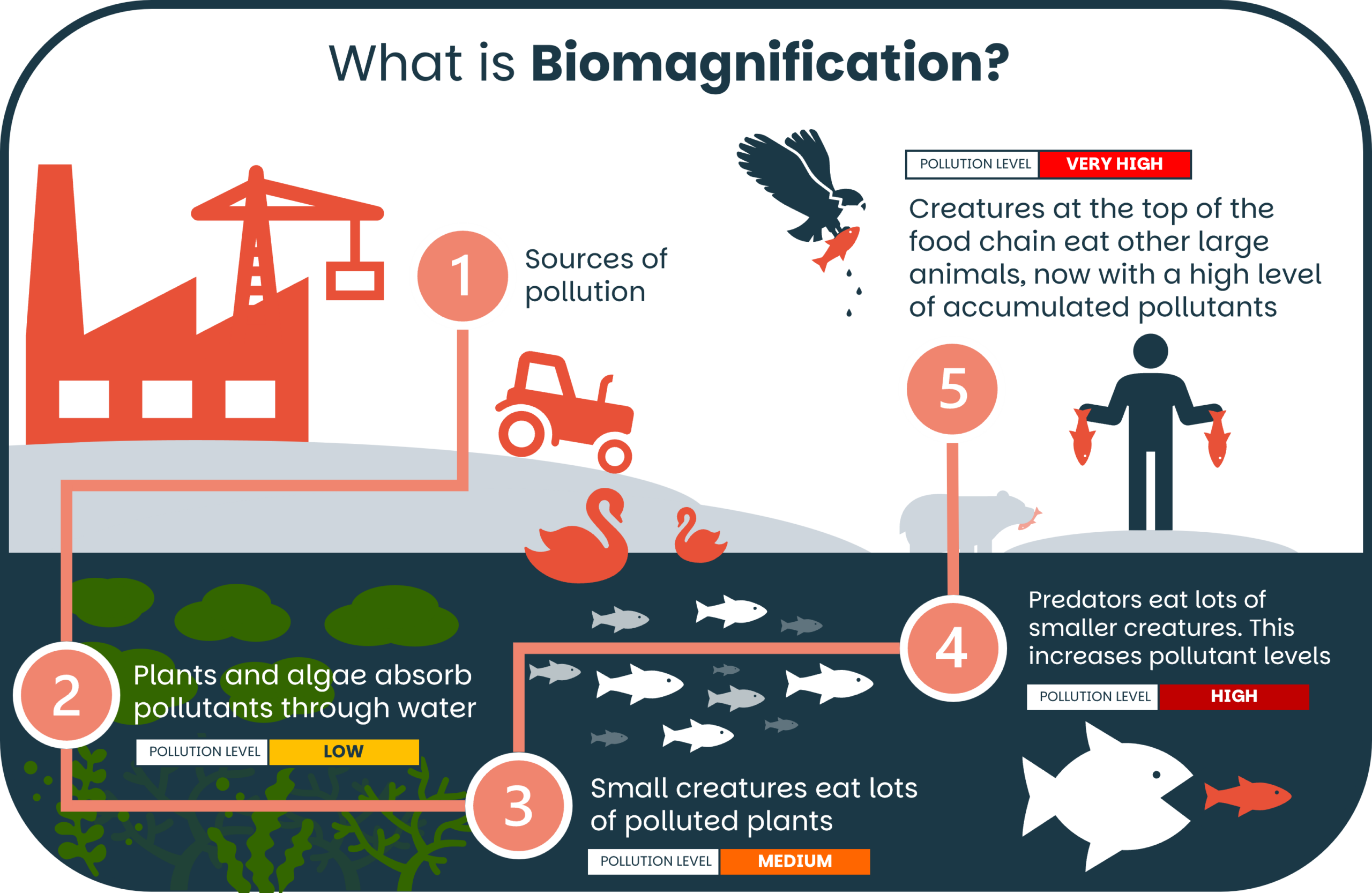
Many of these chemicals are persistent, such as heavy metals, which degrade slowly or not at all – and can therefore accumulate in organisms over long periods. This pathway is also relevant to POPs and PFAS, although their behaviour varies considerably between individual chemicals. Their persistence means that some can remain in ecosystems and organisms for extended periods, allowing exposure to increase through food chains.
For people, this creates several potential routes of exposure: pollutants may enter through the food we eat, the water we drink and the air we breathe. This means that a chemical does not necessarily need to be released directly into the human environment to eventually reach us.
It is also worth remembering that pollution doesn’t stay in one place: a chemical released during production can enter water, become concentrated in soil or sediments, move through the air, or be taken up by plants and animals. Once it has entered one part of the environment, it may move between several others – and ultimately onto us.
What do the chemicals do to us?
We know that many of these chemicals can have adverse effects on our health, and that they are found in both water and food. However, we don’t fully understand the health or environmental impact of all these pollutants. We can be exposed to many different types of chemicals over our lifetime, complicating our understanding of how they affect our bodies.
Experimental studies of chronic dietary exposure to a cocktail of pesticides commonly used in Europe demonstrated impacts our metabolism (the way our bodies process energy from food and drink). This included an increased risk of developing obesity and diabetes.[14]
Many of these chemicals are still being studied, but we are increasingly understanding how they can have unexpected, long-term impacts. Discharges of antibiotics from pharmaceutical industries, urban wastewater and agricultural manures can increase the risks of antibiotic resistance occurring in our environments, which can have impacts on human health.[10]
Waste drugs can also disrupt the lives of aquatic animals, affecting hormone levels, behaviour and reproduction, for example, as higher concentrations of medicines are washed into their environments.[15]
Electronic waste and heavy metals have several known impacts on human health, with children and pregnant women seeming to be most vulnerable. The World Health Organization explains that there are potential links between electronic waste exposure and adverse neonatal outcomes, neurodevelopment in children, and reduced lung and respiratory function This could increase the occurrence of conditions like asthma, particularly when linked to contaminated air pollution (common near e-waste recycling sites).[5]
Persistent organic pollutants are increasingly in the news. Evidence suggests that long-term exposure to POPs, even at low concentrations, can increase the risks of cancer, reproductive disorders and neurobehavioural impairment. There is also evidence that it can cause endocrine disruption (interference with the body’s hormones), genotoxicity (damage to genetic material, like DNA or chromones) and increase the likelihood of birth defects.[16]
Reasons to be Hopeful
There are still reasons to be positive, and action is being taken on many of the pollutants listed here.
For example, there are widespread efforts to control the build-up of POPs in our environment. In 2001, the Stockholm Convention on POPs called for the reduction or elimination of releases of POPs globally. Since its introduction in 2004, 152 countries have backed the regulations outlined in the convention, with over thirty POPs now banned.[17] Whilst they will still be an issue in our environment for a long time, these measures have controlled their proliferation.
Chemicals are, and will continue to be, vital components of the modern world: from rare elements in our phones and computers, to the pesticides and fungicides that ensure the food supply of billions of people.
However, the release of these chemicals and metals in our environment can have long-lasting, often unforeseen consequences, particularly when they combine in our food, water and air. Damage to both the environment and humans can often continue long after the chemicals themselves are banned or regulated. But effective regulation – based on the increasing scientific understanding of their effects – is possible and does make a difference. Chemical pollution can cross national boundaries, making international cooperation essential.
ExpoSignalz is at the forefront of scientific research into chemical pollution, investigating its links to the development of Alzheimer’s disease. As part of the project, we will develop a database of pollutants and produce guidelines to help inform on both the impact of, and measures that policymakers could take to prevent, environmental pollution. Ultimately, with greater understanding of these chemicals, and what they’re doing to us, we hope to drive policy action and help safeguard our shared environment.
References
[1] https://www.niehs.nih.gov/health/topics/agents/pesticides
[2] https://www.dwi.gov.uk/consumers/learn-more-about-your-water/pesticides/
[3] https://www.independent.co.uk/news/science/pesticide-meaning-residue-food-europe-b2824589.html
[5] https://www.who.int/news-room/fact-sheets/detail/electronic-waste-(e-waste)
[7] https://npic.orst.edu/envir/efate.html
[8] https://www.pan-uk.org/our-environment/
[9] European Environment Agency. Briefing no. 06/2023. How pesticides impact human health and ecosystems in Europe. doi: 10.2800/760240
[10] https://www.eea.europa.eu/en/newsroom/news/europe-wide-monitoring-for-antimicrobial-resistance
[11] https://eeb.org/en_gb/the-problem-of-pharmaceutical-pollution/
[12] Jessica Briffa, Emmanuel Sinagra, Renald Blundell et al. Heavy metal pollution in the environment and their toxicological effects on humans. Helyion, 2020; 6.
[13] https://www.who.int/news-room/fact-sheets/detail/mercury-and-health
[14] Lukowicz C, Ellero-Simatos S, Régnier M, et al. Metabolic Effects of a Chronic Dietary Exposure to a Low-Dose Pesticide Cocktail in Mice: Sexual Dimorphism and Role of the Constitutive Androstane Receptor. Environ Health Perspect. 2018 Jun 25;126(6):067007. doi: 10.1289/EHP2877. PMID: 29950287; PMCID: PMC6084886.
[17] https://www.pops.int/TheConvention/Overview/History/Overview/tabid/3549/Default.aspx