
Across Europe, the transition towards a circular economy is increasing the amount of waste being sorted, handled, and recycled. While this development is essential for sustainability, it also brings growing attention to the working environment of waste workers.
Waste handling causes exposure to bioaerosols (airborne dust, fungi, bacteria, and endotoxin). These exposures can affect workers’ health and have been associated with symptoms such as irritation of the eyes and airways, as well as inflammatory responses in the body. Despite this, there is still limited knowledge on:
- which exposure levels cause health effects and
- how best to reduce these exposures in practice. The first may be related to the large diversity of fungal and bacterial species, which may affect workers differently.
In the EXPOSIM project, we further study the impact of bioaerosol exposure, including species identification, and whether technical and behavioural interventions can reduce occupational exposure to airborne dust and microorganisms in waste treatment plants – and whether such reductions are reflected in biological markers of inflammation.
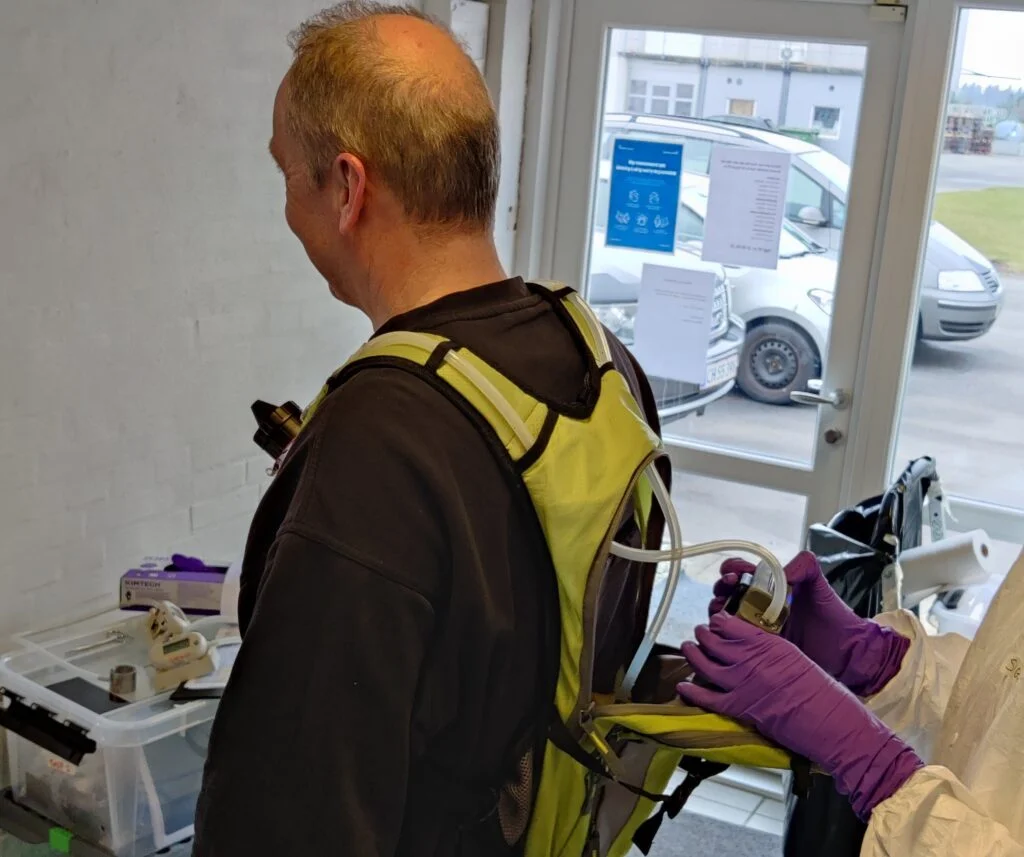
Our study focuses on real-life working conditions. We follow workers during their normal tasks and measure exposure using personal air samplers worn during the workday. At the same time, we collect biological samples – such as blood and nasal lavage to better understand how exposure may affect workers.
A key aspect of the project is collaboration with the workplaces. Interventions are developed based on identified exposure sources, existing knowledge, and what is feasible in daily operations. This ensures that proposed solutions are both practical and relevant for the sector.

Importantly, the study is part of a larger European collaboration, with similar investigations conducted in Denmark, Portugal, and Poland. By harmonising methods and combining data across countries, we aim to strengthen the evidence base and improve our understanding of how environmental exposures influence immune health.
For more information about EXPOSIM and its research, visit our website.